
What is acrylic?
acrylic sheet
The Chinese name for acrylic is transliterated from the English word Acrylics, and the common Chinese names are acrylic and acrylic. It is a general term for acrylic and methyl acrylic chemicals. Including monomers, boards, granules, resins, and composite materials. Acrylic sheet is polymerized from methyl methacrylate monomer (MMA), also known as polymethyl methacrylate (PMMA) sheet organic glass, which is a special processed organic glass. It is known as the 'Plastic Queen'. The research and development of acrylic has a history of over a hundred years.
1. Process performance
Acrylic sheets have a crystal like transparency with a light transmittance of over 92%. Acrylic sheets colored with dyes have excellent color development effects. In addition, acrylic sheets have excellent weather resistance, high surface hardness and gloss, and good high temperature resistance. Acrylic sheets have good processing performance and can be divided into two types according to production processes: casting type and extrusion type. Both thermoforming (including compression molding, blow molding, and vacuum forming) and mechanical processing methods such as drilling, turning, washing, cutting, etc. can be used. Mechanical cutting, scraping, and carving controlled by microcomputers not only greatly improve processing accuracy, but also enable the production of more exquisite patterns and shapes than traditional methods. In addition, acrylic sheets can be laser cut and laser engraved to produce products with unique effects.
Hardness is one of the parameters that can reflect the production process and technology of cast acrylic sheets, and is an important part of quality control. Hardness can reflect the purity of raw MMA, weather resistance, and high temperature resistance of the board. Hardness directly affects whether the board will shrink, bend or deform, and whether there will be surface cracks during processing. Hardness is one of the hardness indicators for evaluating the quality of acrylic sheets. The cast acrylic board has the current high hardness index, with an average Dalloway hardness value of 90 degrees.
Acrylic board has excellent weather resistance, especially for outdoor use, ranking first among other plastics. It also has good surface hardness and gloss, and has high processing plasticity, which can be made into various shapes and products as needed. There are various types of boards with rich colors (including semi transparent color boards), and another characteristic is that thick boards can still maintain high transparency.
2 Technical indicators
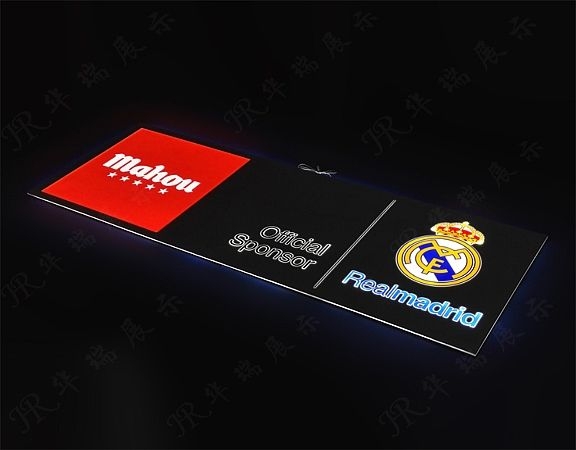
Acrylic lightbox
It has good transparency and is a colorless transparent organic glass sheet with a transmittance of over 92%; It has excellent weather resistance and strong adaptability to the natural environment. Even if it is exposed to sunlight, wind and rain for a long time, its performance will not change, and its anti-aging performance is good; Good processing performance, suitable for both mechanical processing and easy thermoforming; Acrylic sheets can be dyed, and the surface can be painted, silk screened, or vacuum coated. Non toxic, even in long-term contact with humans, it is harmless, and the gas produced during combustion does not produce toxic gases. And it has excellent weather resistance, acid resistance, and alkali resistance. There are various types of boards with rich colors (including semi transparent color boards), and another characteristic is that thick boards can still maintain high transparency.
Technical Indicators:
Density: 19kg/dm3; Transmittance: 92%; Impact strength ≥ 16kg/cm3; Tensile strength ≥ 61Kg/m3; Thermal deformation temperature ≥ 78 ℃; Hot softening temperature ≥ 105 ℃; Specification: 1.22× 2.44、1.22× 1.83m、1.25× 2.5m、2× 3m、2.05× 3.05m......; Thickness: 2mm-50mm.
1. Unparalleled outdoor weather resistance, the panel is coated with high concentration ultraviolet absorbers, and the metal base is sprayed with imported car paint, which can guarantee long-term durability, non fading, and a service life of up to 5-8 years.
2. The transparent board is crystal clear and transparent, 200 times larger than glass products, with almost no risk of breakage.
3. The surface has high gloss, smooth and even, with a light transmittance of up to 93%, excellent light transmission, soft and dazzling light.
4. There are various colors and surface effects such as transparent, semi transparent, and milky white. It is made of a new type of polyester material and is formed by hot bending or flat edging. The metal base is equipped with a built-in light source, which has a strong visual impact.
5. Excellent processing performance; Thermoforming produces visually striking signs and logos with simple processing and reasonable cost. Exquisite craftsmanship, full font with mirror effect, no wrinkles or seams on the base, and no exposed rivets.
6. Green and environmentally friendly, waste materials can be thoroughly recycled, and recycling is easy and feasible. Good light transmission performance, corresponding reduction of light source products, energy-saving, and lowering usage costs.
7. Excellent surface hardness and scratch resistance, the product provides good protection for built-in light sources and extends the service life of the light source product.
8. Good chemical resistance, superior to most other plastic materials.
9. Easy to clean, maintain, and keep the appearance of signs and light boxes as new all year round. Reasonable design, rain and moisture resistance, open structure, easy to maintain.
10. Flame resistance: non self igniting and self extinguishing.
3 Characteristics of profiles
Acrylic casting board: high molecular weight, excellent rigidity, strength, and excellent chemical resistance. The characteristics of this type of board are small batch processing, unparalleled flexibility in color system and surface texture effect, and complete product specifications, suitable for various special purposes.
Acrylic extruded sheet: Compared with cast sheet, extruded sheet has a lower molecular weight and slightly weaker mechanical properties. However, this feature is beneficial for bending and thermoforming processing, and is advantageous for fast plastic vacuum forming when dealing with large-sized sheets. Meanwhile, the thickness tolerance of extruded plates is smaller than that of cast plates. Due to the large-scale automated production of extruded boards, it is inconvenient to adjust colors and specifications, which limits the diversity of product specifications
For many years, thermoforming has been one of the creative uses of acrylic sheets. With the improvement of processing technology and the enrichment and perfection of product varieties and performance, compared to other traditional advertising sign materials, the processing of acrylic is simpler and safer, and the cost-effectiveness of products is also more reasonable.
1、 Weather resistance: Acrylic sheet has excellent outdoor weather resistance and can be considered one of the best plastic materials. Under normal outdoor usage conditions, a well-designed and processed acrylic board sign will not experience a decrease in mechanical strength or significant changes in appearance after a 10-year service life.
2、 The transparency performance of color swatches: High quality acrylic sheets are produced according to strict quality standards to ensure that different batches and sheets have the same color. Due to the uniform distribution of colors along the entire thickness of the color palette, the scratches on the surface of the reverse plate may have some impact on the appearance color when illuminated.
The transparency of most acrylic color plates decreases with the increase of plate thickness, which may have adverse effects on certain labeling applications - for example, when using color plates of different thicknesses for the same label, there may be significant color differences. In this case, it is possible to consider using acrylic color plates with fixed transparency colors, which present the same color transparency even though the thickness of the plates is the same.
Acrylic sheets and profiles: tube rod, ordinary board, transparent board, colored board, textured board, solid flat board, multi-layer board, frosted board, corrugated board, impact resistant board, special grade board, national standard board, extra thick board, color changing board.
4 Application scope
The research, development, and use of acrylic sheets have a history of over a hundred years. In 1880, the polymerizability of methyl acrylic acid became known to people; The synthesis and research of poly (propionic acid) esters were completed in 1901; In 1927, attempts were made to industrialize manufacturing using the aforementioned synthesis method; In 1937, the industrial manufacturing and development of methyl methacrylate was successful, leading to large-scale manufacturing. Due to its excellent strength, toughness, and transparency, it was used in aircraft windshields, tank field of view mirrors, and other applications during World War II. Common mobile phone screens are made of optical grade acrylic.
Qingdao Aquarium Acrylic Column Water Tank
Acrylic board is mainly used for carving, decoration, and handicraft production. Extrusion type is usually used for the production of advertising signs, light boxes, etc. PMMA has the advantages of light weight, low cost, and easy molding. Its molding methods include casting, injection molding, mechanical processing, thermoforming, etc. Especially injection molding, it can be produced in large quantities, with a simple process and low cost. Therefore, its application is becoming increasingly widespread, widely used in instrument parts, car lights, optical lenses, transparent pipelines, etc.
In terms of architecture, organic glass is mainly used for daylighting, roofs, canopies, stairs, and indoor wall cladding. The application of organic glass in lighting lampshades and automotive lighting fixtures for highways and high-end roads is also quite fast. With the construction of hotels, guesthouses, and high-end residences in big cities, the development of daylighting systems has been rapid. Skylighting systems made of organic glass extruded panels have the characteristics of high overall structural strength, light weight, high light transmittance, and good safety performance. Compared with inorganic glass daylighting devices, they have great advantages.
In terms of sanitary ware, organic glass can be used to make products such as bathtubs, washbasins, and dressing tables. Due to its luxurious appearance, depth, easy cleaning, high strength, lightweight, and comfortable use, organic glass bathtubs have been widely used. Acrylic is a good new material for manufacturing sanitary ware after ceramics. Compared with traditional ceramic materials, acrylic not only has unparalleled high brightness, but also has the following advantages: good toughness, not easily damaged; It is highly restorative and can be cleaned by dipping soft foam into toothpaste; The texture is soft, and there is no piercing feeling of coldness in winter; Vibrant colors can meet the individual pursuits of different tastes. Using acrylic to make basins, bathtubs, and toilets not only has exquisite styles and durability, but also has environmental protection effects. Its radiation level is almost the same as that of the human body's own bones. Acrylic sanitary ware first appeared in the United States and has accounted for over 70% of the entire international market since 2008.
Acrylic is a variety of fashionable boutique products, including leather bags, waist bracelets, watches, high heels, heels, hair accessories, brooches, bracelets, buttons, earrings, necklaces, rings, pendants, photo frames, stationery, and more, with unlimited room for development and continuation. Due to its high processing plasticity, good surface hardness, and transparent luster, acrylic material is often used by designers to be combined with various different materials in various exquisite container designs, adding texture and practicality to containers such as lipstick and cosmetics, as well as other daily necessities such as massagers, jewelry boxes, fans, etc. Unleash the cool feeling of acrylic material and combine it with creative design to perfectly present it in various popular products.